Art Critique
Banksy, Pillow Fight
Artist Room, Walled Off Hotel, Bethlehem
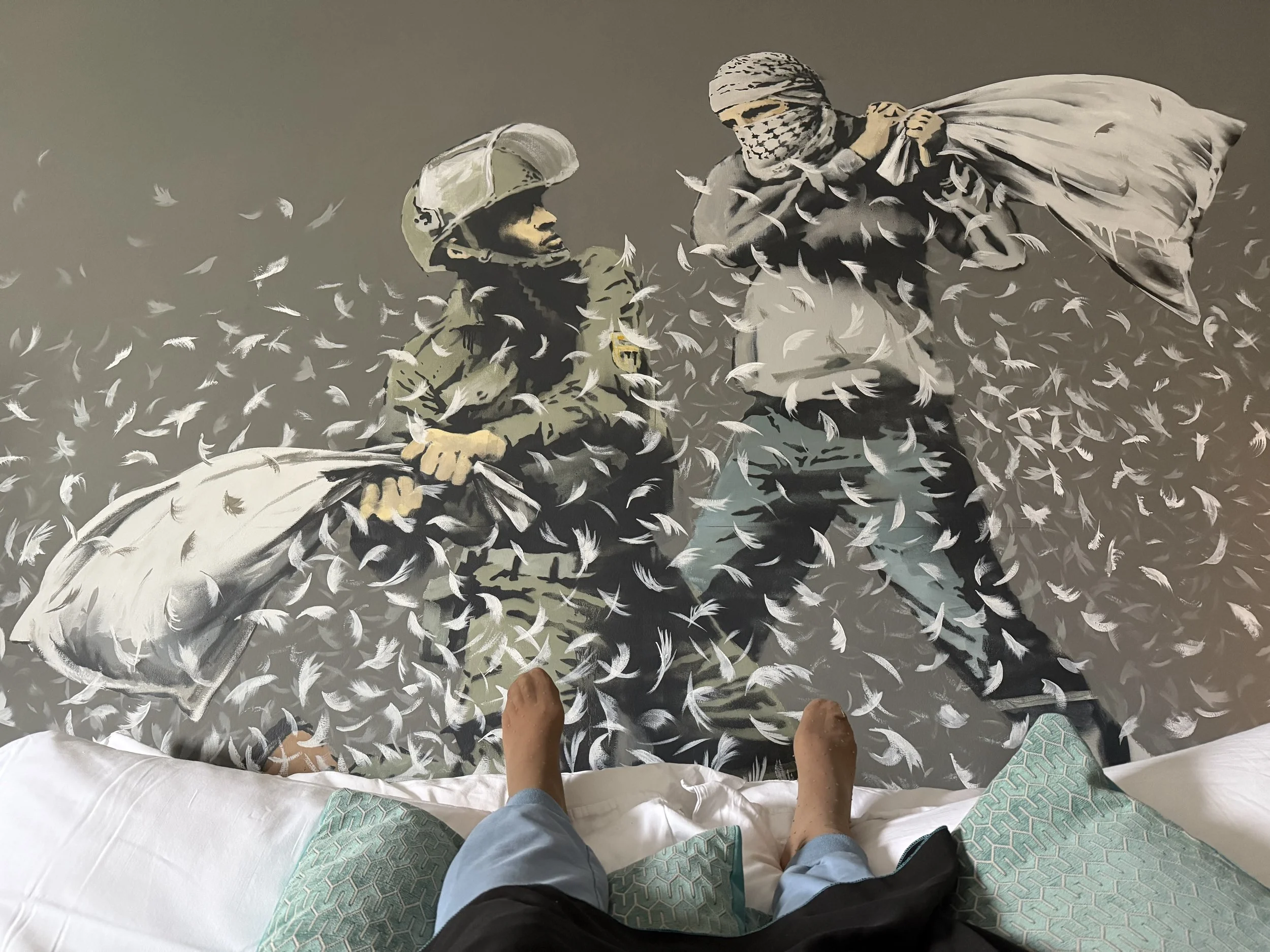
Painted directly onto the wall of the hotel room in which I am staying, Banksy’s Pillow Fight collapses the boundary between artwork and lived experience. This is not a mural encountered at a distance, but one that occupies the same intimate space as rest, vulnerability, and daily routine. The room becomes both a site of refuge and a site of confrontation, mirroring the paradox of life lived beside the wall.
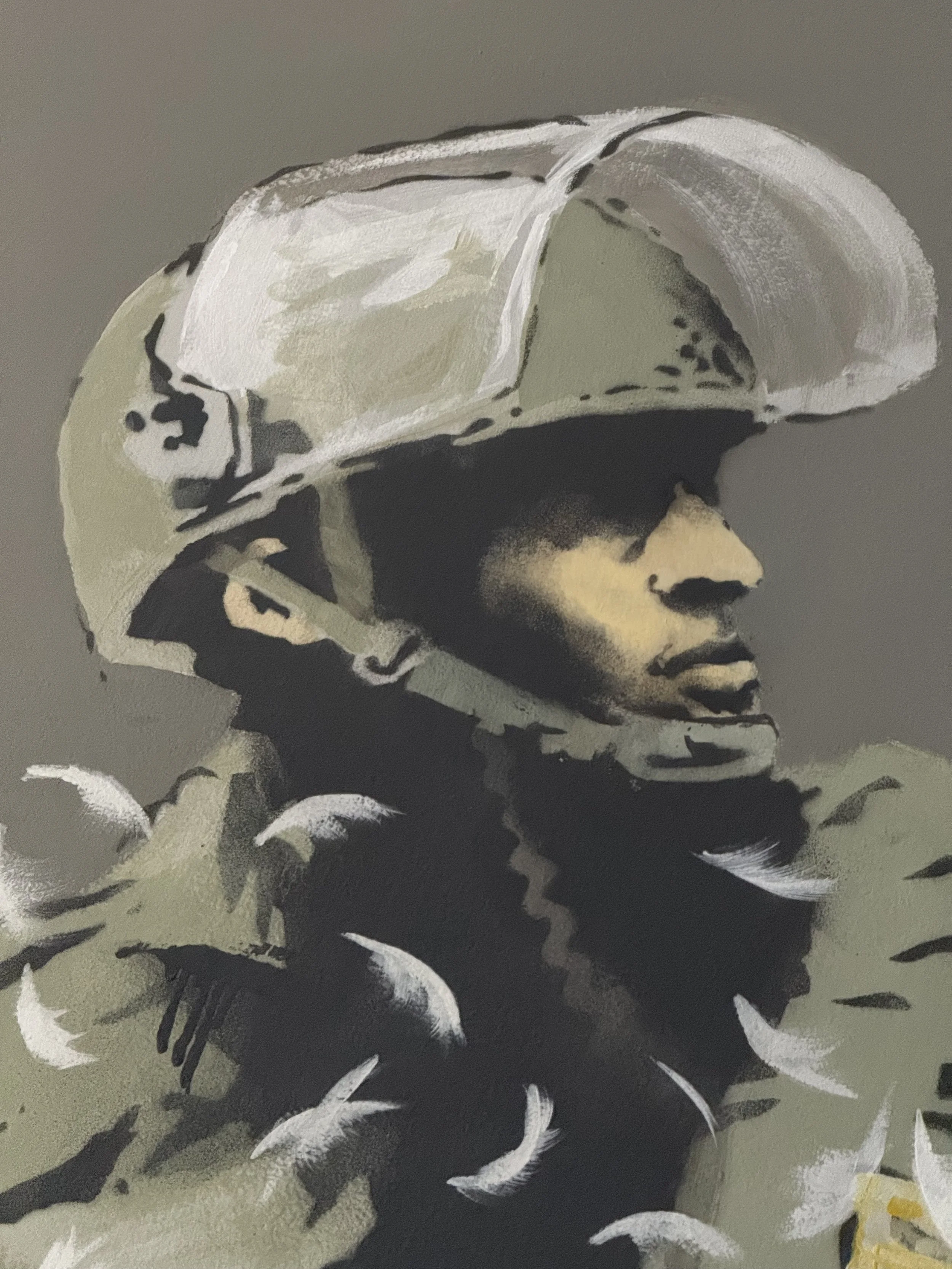
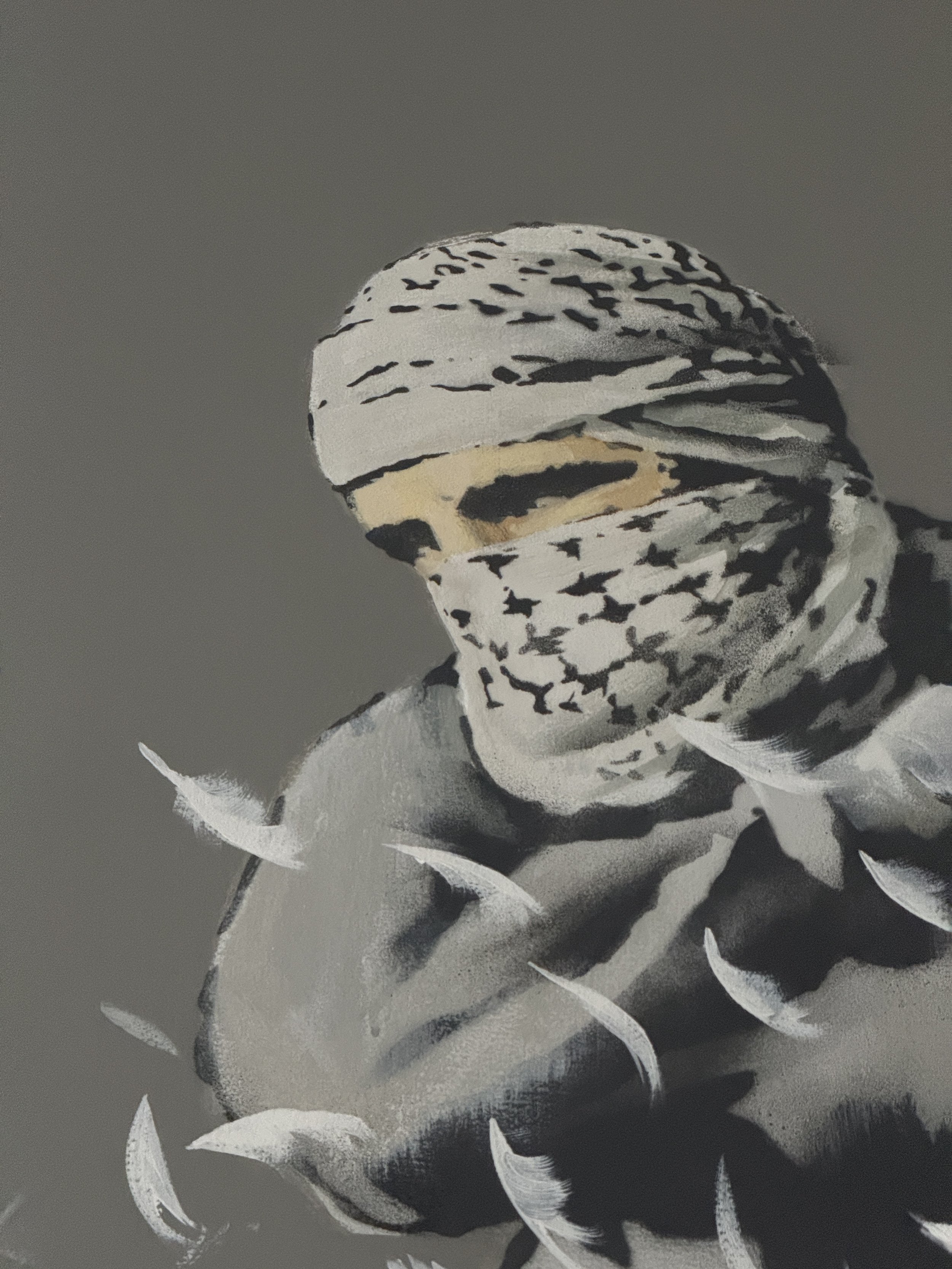
The mural depicts two men locked in what appears to be a playful pillow fight. The choice of pillows — objects associated with sleep, comfort, and domestic safety — immediately subverts the visual language of conflict. In a place where violence is embedded in the architecture itself, softness becomes an act of resistance. The gesture is absurd, tender, and unsettling all at once.
The psychological tension of the work lies in the contrast between the two figures. The man wearing a keffiyeh meets the viewer with exposed eyes that radiate seriousness and emotional weight — a gaze shaped by endurance, anger, and memory. Opposite him, the second figure’s eyes are concealed while his face remains visible, almost relaxed, perhaps even smiling. This asymmetry destabilizes conventional assumptions about aggressor and victim, power and vulnerability. The conflict, Banksy suggests, is not as clear-cut as political narratives demand.
Importantly, these are not portrayed as enemies but as neighbours. Their physical proximity implies familiarity, even the possibility of friendship. Stripped of ideology, borders, and claims of ownership, they could be equals engaged in play rather than struggle. The wall that divides them — and the systems that sustain it — is not born from their relationship, but imposed upon it.
By placing this image inside a hotel room, Banksy implicates the viewer directly. Sleep, reflection, and looking out the window toward the real wall become inseparable from the artwork. One cannot escape the message by leaving the gallery; the work persists through the night. The mural asks not who is right or wrong, but what fear does to human connection — and who benefits from its continuation.
Ultimately, Pillow Fight reframes conflict as a tragic performance fueled by fear, hatred, and greed. It suggests that the true struggle is not over land, but over energy — the emotional and psychological forces that keep people divided. In this room, where art and life merge, the mural becomes a quiet proposition: that refusing to fight, choosing softness, and returning to the heart may be the most radical acts of all.
— Dr. Anna Biela